
The Supreme Court struck down President Donald Trump’s far-reaching global tariffs on Friday, handing him a significant loss on an issue crucial to his economic agenda.
The decision centres on tariffs imposed under an emergency powers law, including the sweeping “reciprocal” tariffs he levied on nearly every other country.
It’s the first major piece of Trump’s broad agenda to come squarely before the nation’s highest court, which he helped shape with the appointments of three conservative jurists in his first term.
The Republican president has been vocal about the case, calling it one of the most important in U.S. history and saying a ruling against him would be an economic body blow to the country. But legal opposition crossed the political spectrum, including libertarian and pro-business groups that are typically aligned with the GOP. Polling has found tariffs aren’t broadly popular with the public, amid wider voter concern about affordability.
The Supreme Court ruling comes despite a series of short-term wins on the court’s emergency docket that have allowed Trump to push ahead with extraordinary flexes of executive power on issues ranging from high-profile firings to major federal funding cuts.
The tariffs decision doesn’t stop Trump from imposing duties under other laws. While those have more limitations on the speed and severity of Trump’s actions, top administration officials have said they expect to keep the tariff framework in place under other authorities.
The Constitution gives Congress the power to levy tariffs. But the Trump administration argued that a 1977 law allowing the president to regulate importation during emergencies also allows him to set tariffs. Other presidents have used the law dozens of times, often to impose sanctions, but Trump was the first president to invoke it for import taxes.
Trump set what he called “reciprocal” tariffs on most countries in April 2025 to address trade deficits that he declared a national emergency. Those came after he imposed duties on Canada, China and Mexico, ostensibly to address a drug trafficking emergency.
A series of lawsuits followed, including a case from a dozen largely Democratic-leaning states and others from small businesses selling everything from plumbing supplies to educational toys to women’s cycling apparel.
The challengers argued the emergency powers law doesn’t even mention tariffs and Trump’s use of it fails several legal tests, including one that doomed then-President Joe Biden’s $500 billion student loan forgiveness program.
The economic impact of Trump’s tariffs has been estimated at some $3 trillion over the next decade, according to the Congressional Budget Office. The Treasury has collected more than $133 billion from the import taxes the president has imposed under the emergency powers law, federal data from December shows. Many companies, including the big-box warehouse chain Costco, have already lined up in court to demand refunds.
Gary Shapiro, executive chair and CEO at Consumer Technology Association, said this decision demonstrated returning tariff authority to Congress.
“The government must act quickly to refund retailers and importers without red tape or delay,” Shapiro said in a statement today.
“Our leaders should resist the urge to compound the error by turning to new tariff authorities that add more burden and uncertainty for America’s innovators, especially small businesses and startups.”
CTA represents 1,200 technology companies in North America. They said the decision signifies a clear tariff authority return to Congress.
“We applaud this clear step toward restoring balance, accountability, and confidence in the U.S. economy.”
Canada reacts
Minister of Internal Trade Dominic LeBlanc expressed in a statement that there’s still “critical work” ahead of supporting Canadian businesses and workers affected by the tariffs — specifically on steel, aluminum and the auto sectors.
Leblanc alluded that Canada will be using the Supreme Court ruling as a pivot point, turning its focus to the upcoming CUSMA review while seeking to stabilize trade ties.
“We are working to create growth and opportunities on both sides of the border, while strengthening our collaboration with reliable trading partners and allies around the world,” Leblanc said.
Conservative Party Leader Pierre Poilievre echoed that what happens after striking down IEEPA tariffs now hinges on the upcoming CUSMA review. He said the party especially expect lumber, aluminum, steel and auto tariffs to be lifted.
“Anything less than this means our workers will continue to suffer,” he said in a statement.
“The truth is no one can control what President Trump will say or do and so we must instead focus on what we can control.”
Poilievre said Canada needs to concentrate on advancing energy and critical mineral development, and reinforce national defence to improve its leverage in trade talks with the U.S.
Provincially, Ontario Premier Doug Ford said the battle isn’t over yet. He said Canada needs to continue to watch how the “White House reacts,” in a statement.
“We need to keep up the fight against tariffs on auto, steel, aluminum and forestry, which remain in place and continue to hurt our workers,” Ford said.
“I won’t stop fighting until every last tariff against Canada is dropped so we can grow our economies and create jobs on both sides of the border.”
With files from Sydney Ko.
This article has been updated with comments from Ford, Leblanc and Poilievre.
News
Supreme Court strikes down Trump’s sweeping tariffs, upending central plank of economic agenda
The Supreme Court struck down President Donald Trump’s far-reaching global tariffs on Friday, handing him a significant loss on an issue crucial to his economic agenda.
Published Feb 20, 2026 at 6:13pm

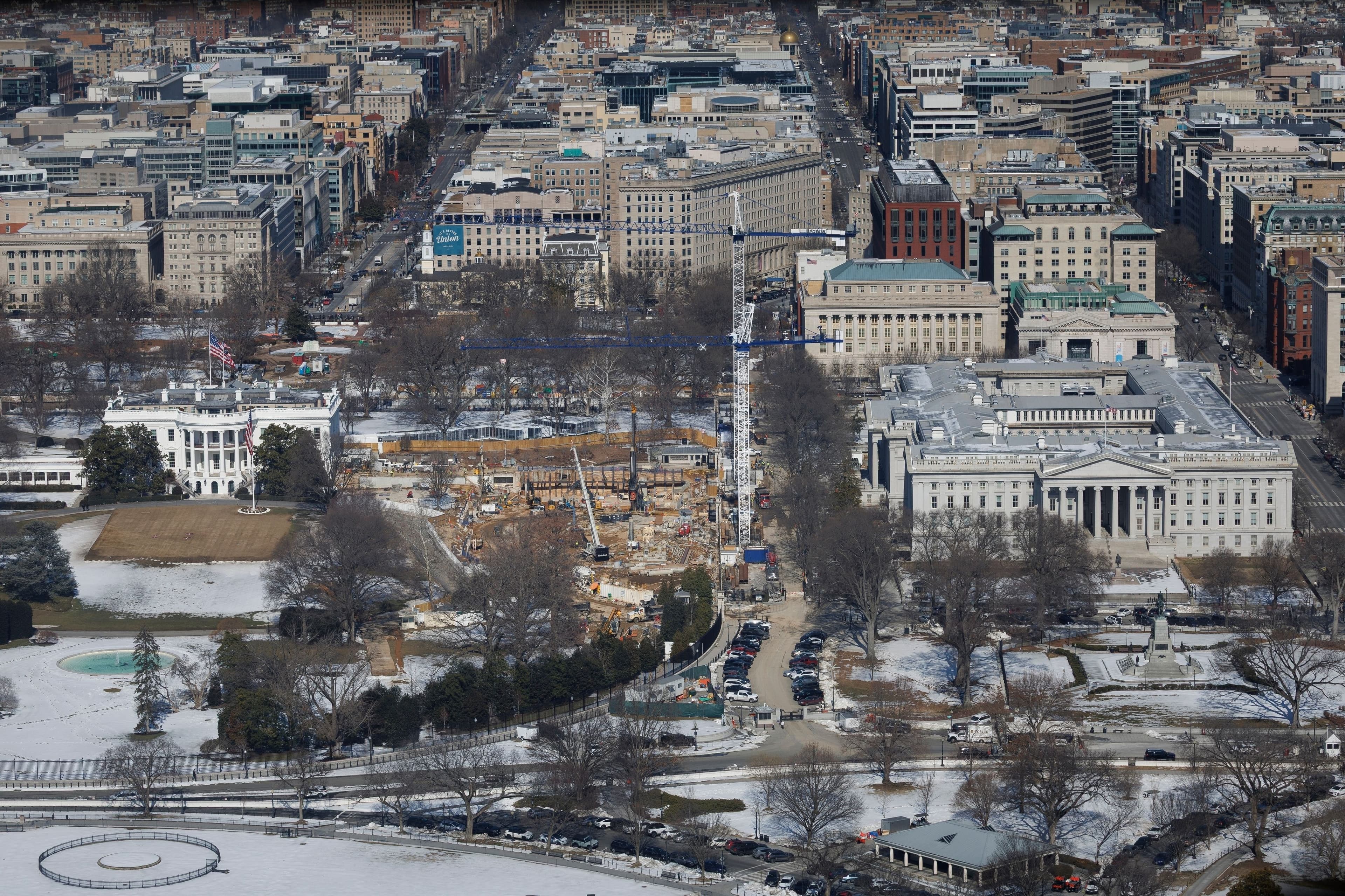
Construction continues on the ballroom where the East Wing used to stand at the White House, Friday, Feb. 13, 2026, in Washington. (AP Photo/Tom Brenner)
Read this for free.
Log in below to get access to this article. One free per week.