
News
As Ontario pushes for a bilateral agreement with the U.S., will Canada be stronger negotiating alone or with Mexico as a partner?
A bilateral trade agreement might streamline negotiations and mitigate some of the unpredictability tied to trilateral deals. By focusing solely on U.S.-Canada relations, the two countries could prioritize shared economic goals, particularly in sectors like automotive manufacturing and energy.
Published Nov 15, 2024 at 8:56pm

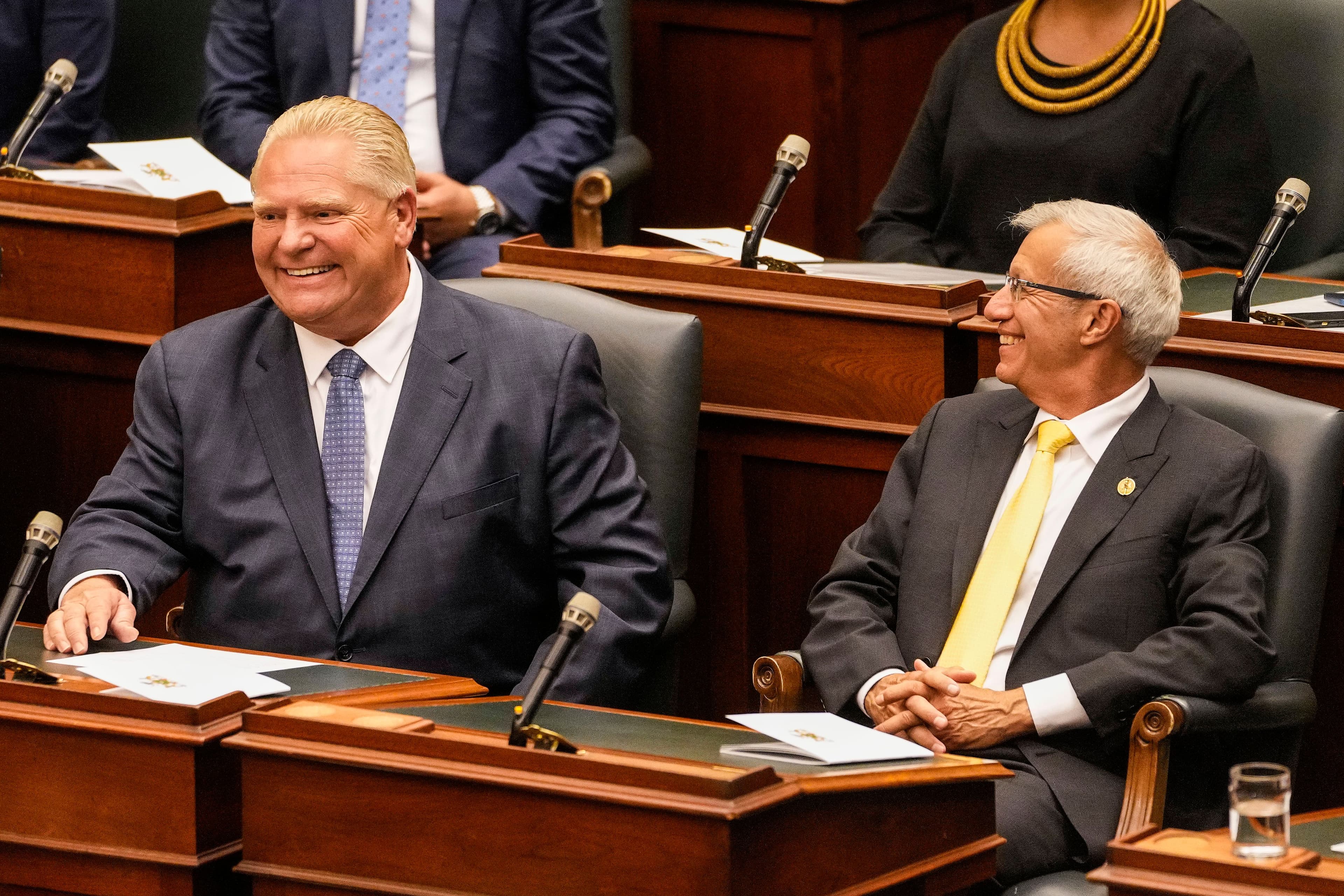
Ont Legislature 20220809 Ontario Premier Doug Ford, left and Minister of Economic Development, Job Creation and Trade Victor Fedeli react after Lt.-Gov. Elizabeth Dowdeswell delivered her Speech from the Throne at Queen's Park in Toronto, on Tuesday, August 9, 2022. THE CANADIAN PRESS/Andrew Lahodynsk